

 Author:
 This 2-Ingredient vegan seitan "chicken" is so chewy and juicy. The washed flour seitan pulls apart into shreds that are perfect for adding to any dishes like pastas, stews, sandwiches, salads, stir-fry's, and more!
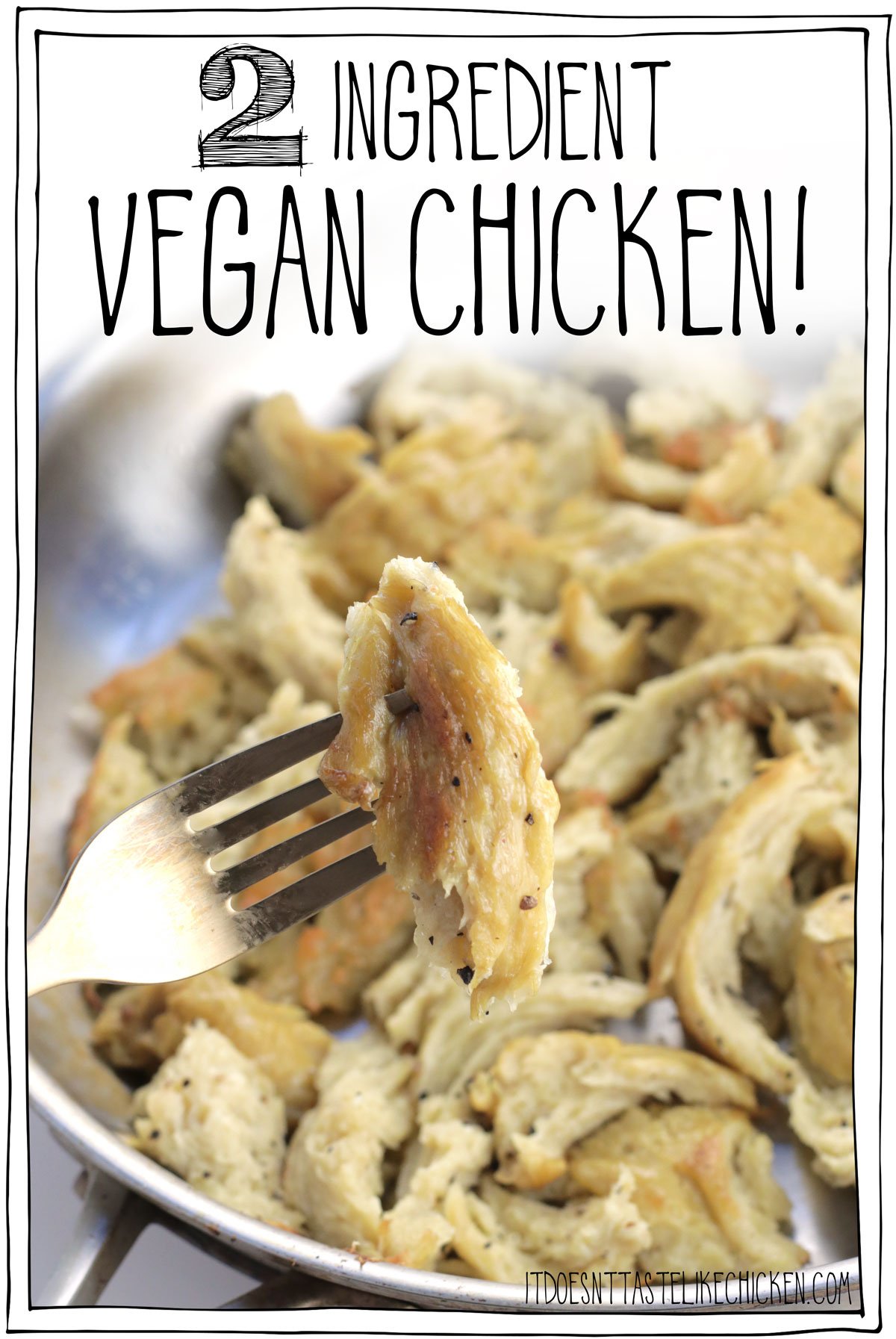
Have you have seen the viral TikTok trend of making this washed flour seitan? Although this technique may be new to some, making seitan in this way is actually a historic technique that has been documented in China since the 6th century, most commonly consumed by Buddhist monks! The process of washing the flour separates the starch from the gluten (wheat protein) which makes for an incredibly meaty and delicious 2-ingredient vegan chicken! So cool!
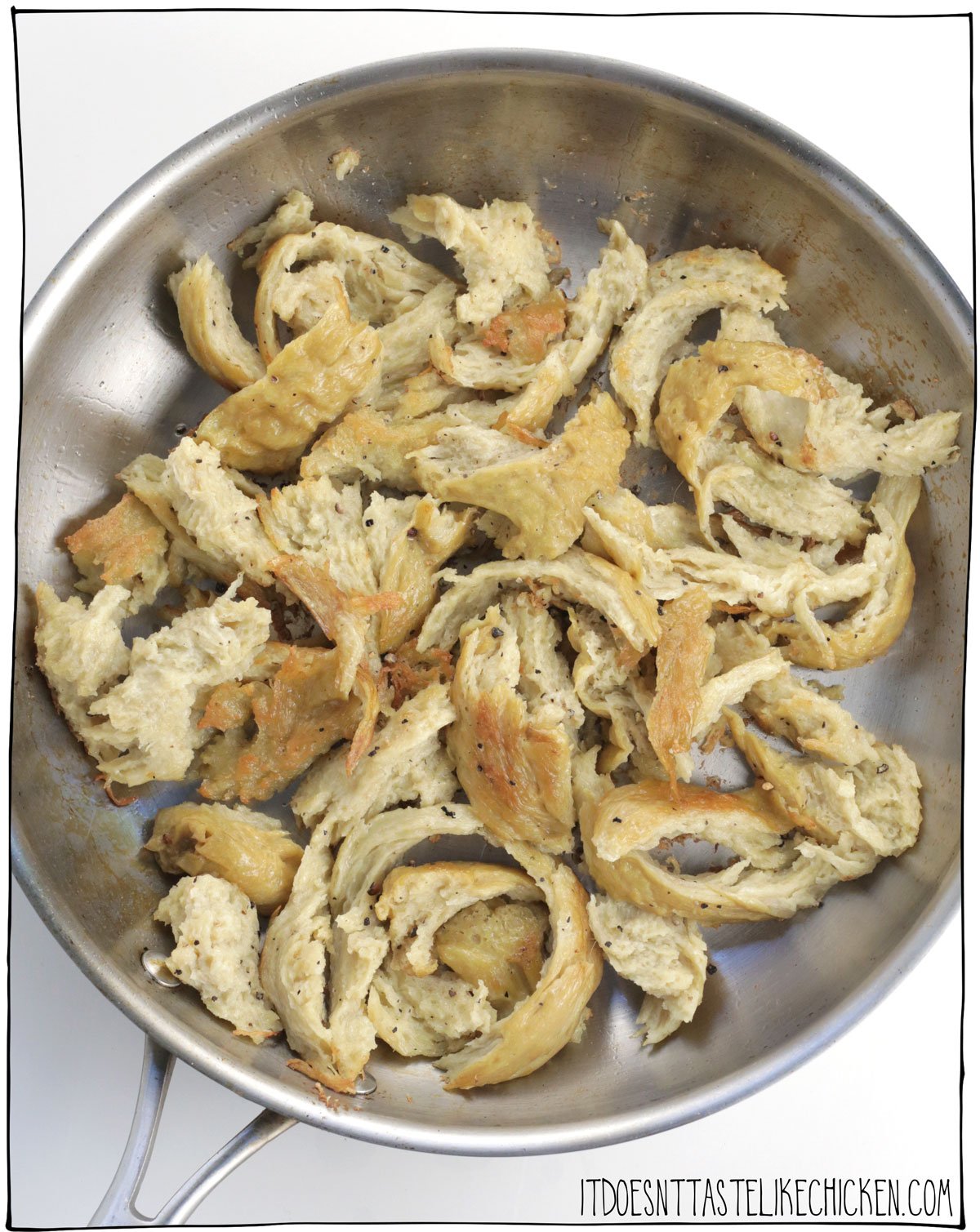
Nowadays you can buy vital wheat gluten (the wheat protein) which allows you to skip the washing the dough process. But for me, curiosity piqued when I saw these TikTok videos and I knew I had to give this ancient technique a try myself.
My goodness, I'm sure glad I did, because making 2 ingredient vegan chicken is fun and although it's a bit time-consuming, each step is actually pretty easy! And the results are SO worth it. This is the most chicken-y vegan chicken I have ever tasted!! Washed flour seitan is chewy and juicy. The seitan pulls apart into shreds that are perfect for snacking on alone, or you can add them to practically any dish- pasta, sandwiches, salads, soups, wherever you like!
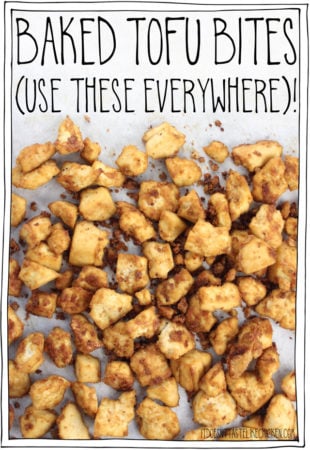
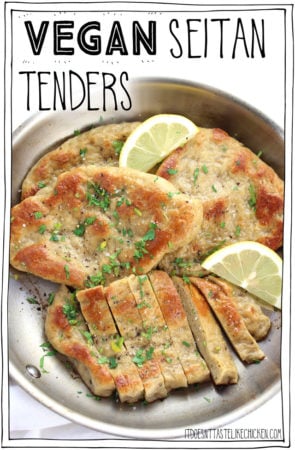
I don't blame you if you aren't interested in this long process, and if that's the case, try making my vegan seitan tenders or (even easier) my baked tofu bites. Both recipes are perfect vegan chicken subs. But if you are feeling up for it, then you're in for a treat! The process is enjoyable and the washed flour seitan is so so so worth it!
How to Make Seitan Chicken:
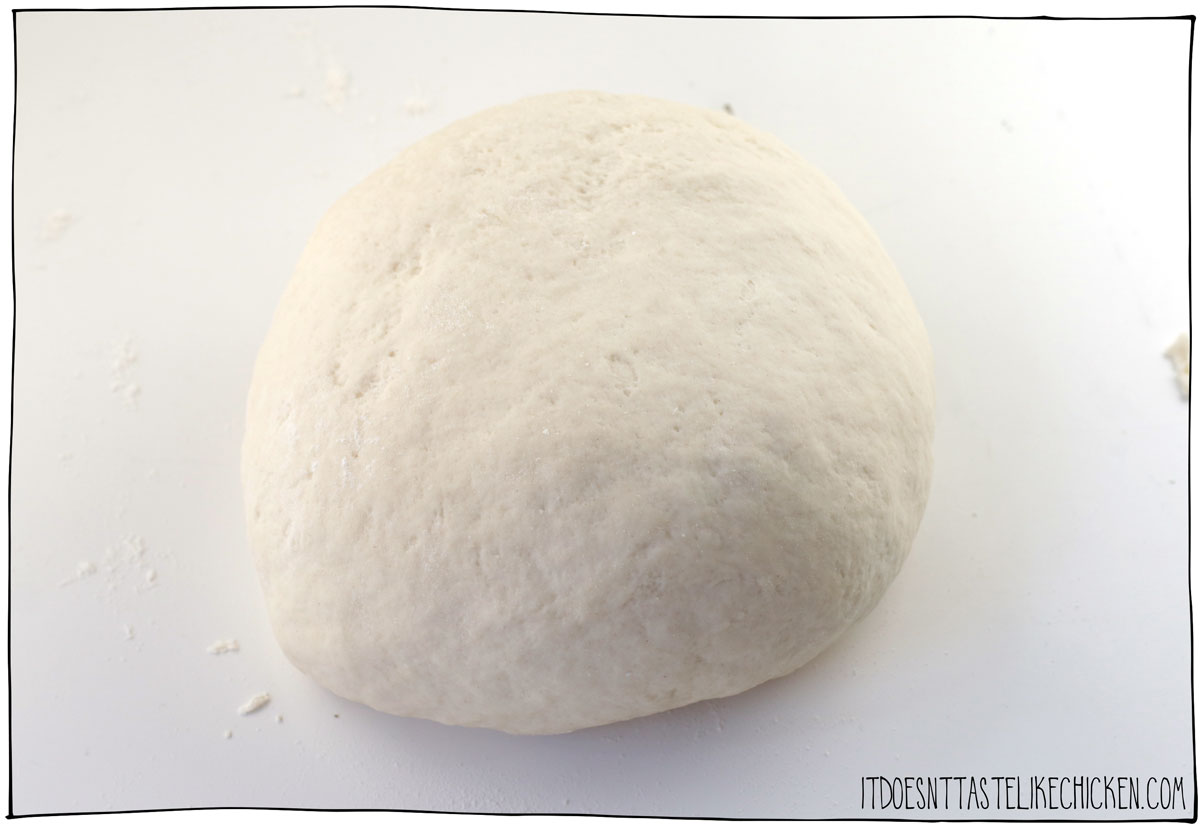
Make the Dough Ball (10 minutes active work):
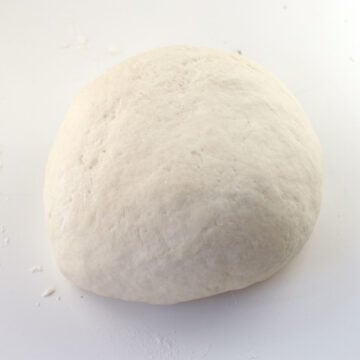
Mix the flour and water together in a large bowl to make a shaggy dough. Using your hands begin kneading the dough in the bowl until it forms a ball. Dump the dough out onto a clean work surface and knead the ball of dough well for 5 - 8 minutes. If the dough is too sticky, sprinkle the dough with flour as needed. Alternatively, if you have a mixer with a dough hook you can use this to knead the dough.
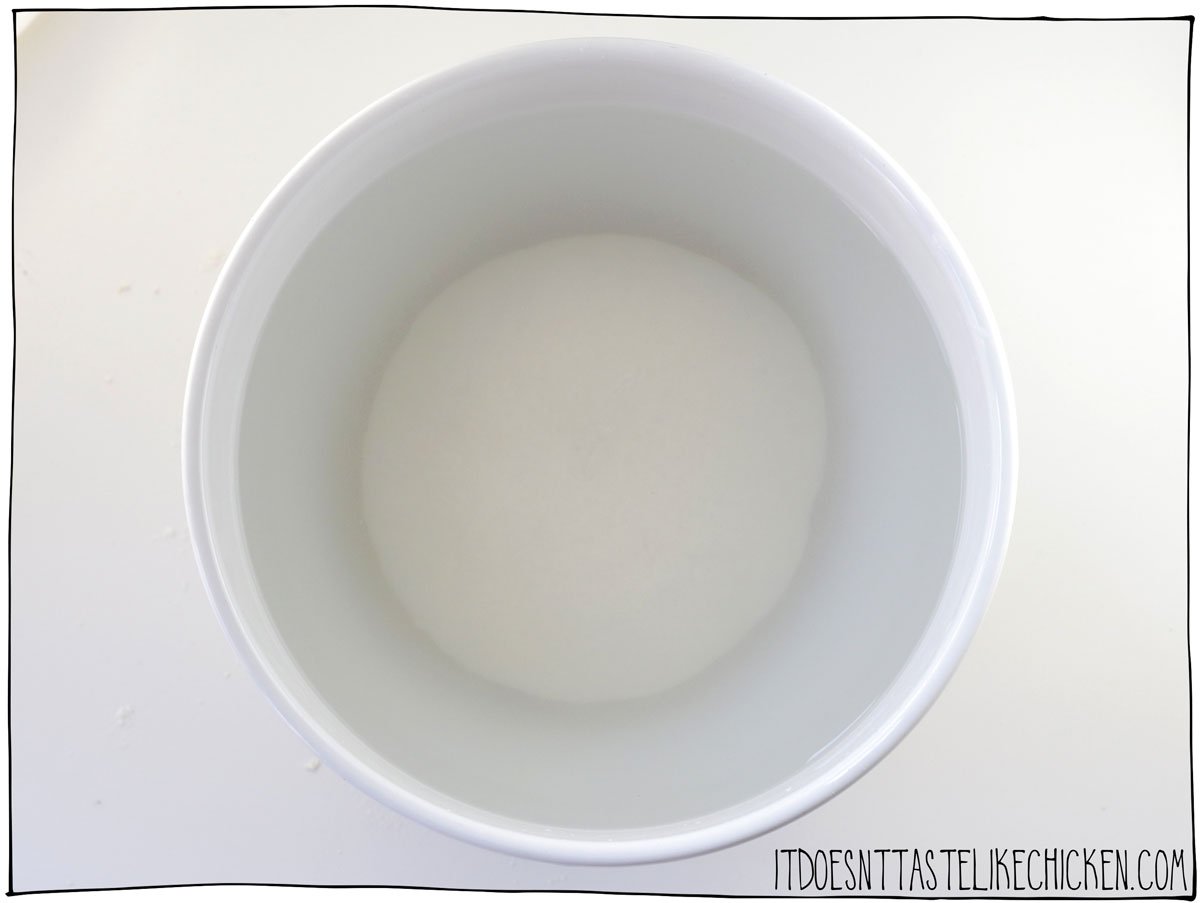
Soak the Dough (1 - 2 hours hands-off):
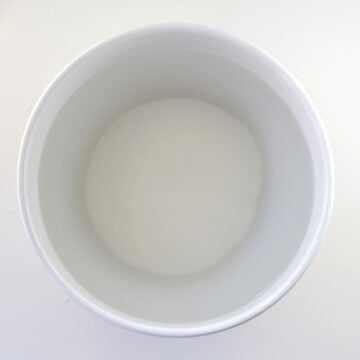
Put the kneaded dough ball in a large clean bowl and cover it with cool water. Let rest in the water for 1 - 2 hours or overnight.
Wash the Dough (15 - 20 minutes active work):
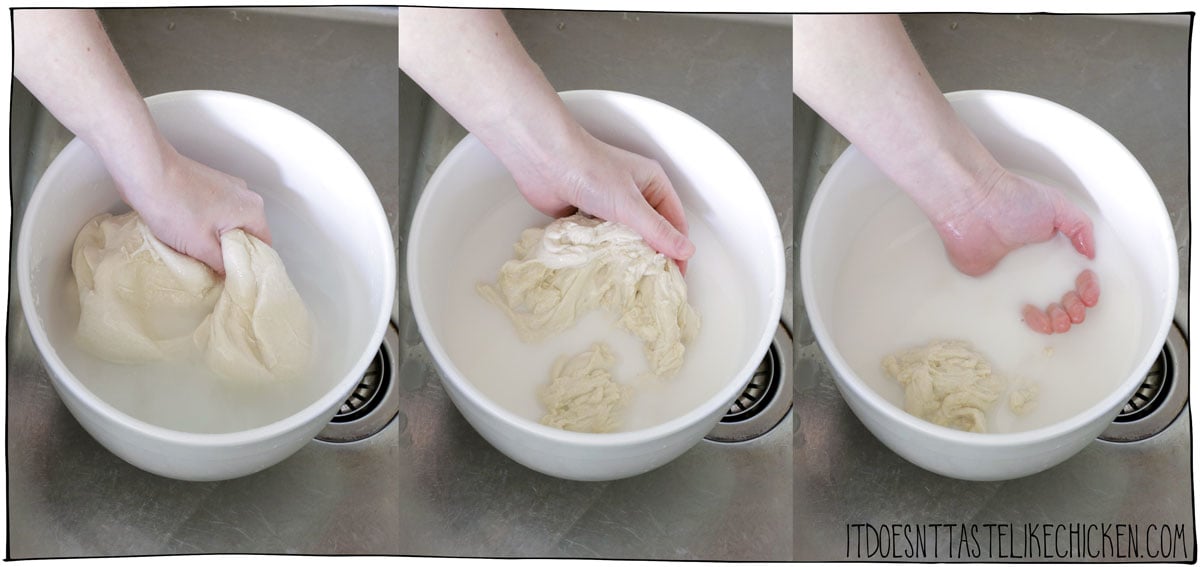
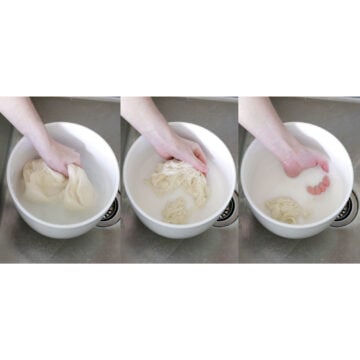
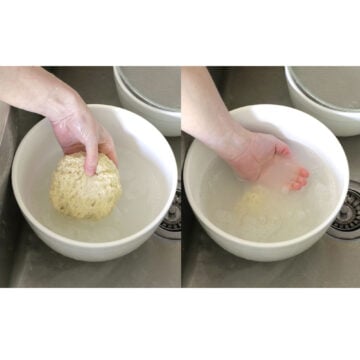
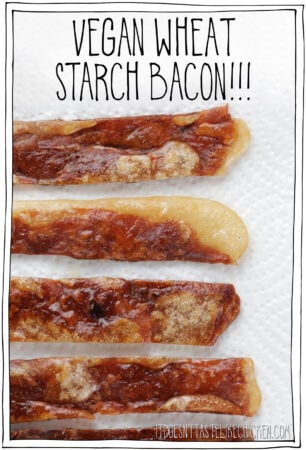
Wash 1: drain the water off of the dough ball, then cover the dough with fresh room temperature water. Squeeze the dough under the water, squishing it between your fingers. The dough will be tough at first but will quickly soften and feel slimy. Continue squishing the dough until the water for 3 - 5 minutes is opaque thick milky white, this is the starch separating from the gluten. Drain off the starchy water. You can either discard the water or save it to use to make vegan bacon!
Saving the starchy water: let the water sit overnight. The starch and water will separate. You will see the yellow water on top, and the white starch which will sink to the bottom. Pour off and discard the water leaving behind just the starch. Store the starch in an air-tight container in the fridge for up to a week or it can be frozen to use later.
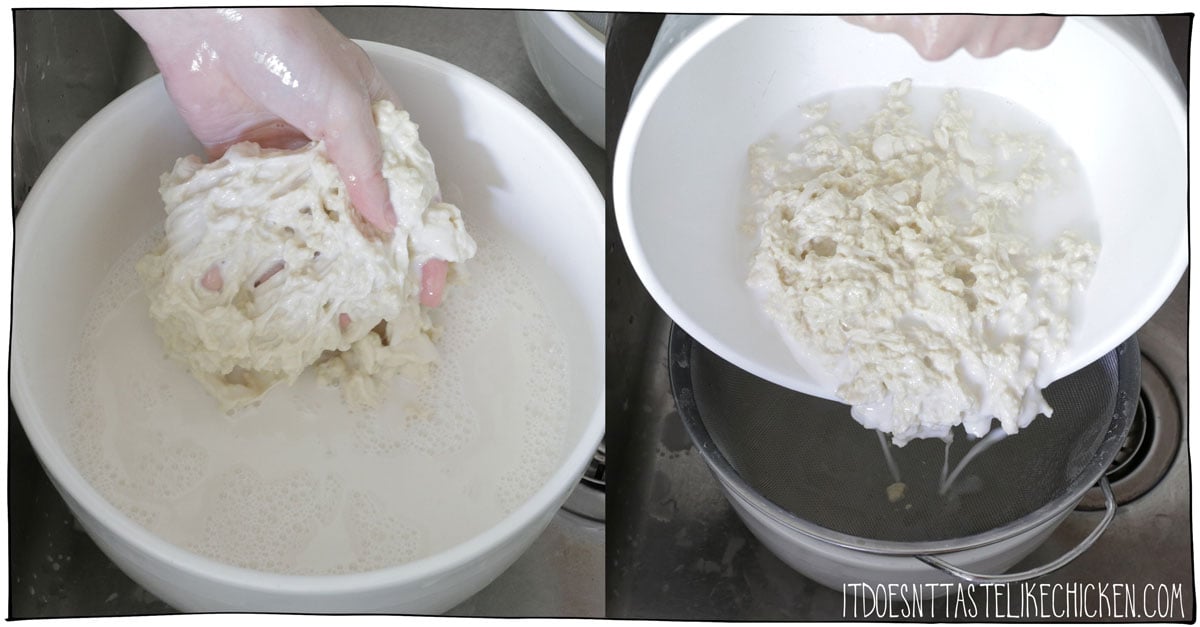
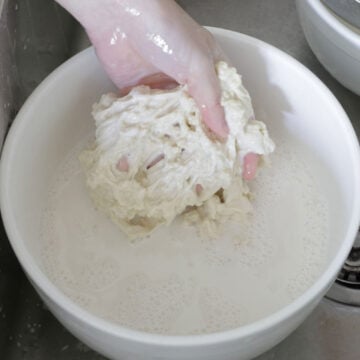
Washes 2 - 3: repeat the process of squeezing the dough underwater, squishing it, and kneading it for several minutes before changing the water. The dough will start to fall apart into clumps, this is a good thing! Drain the starchy water, using a strainer to catch any bits of gluten dough. Note: I save the starchy water from the first 3 washes but do not save the rest of the water from the washes as there will not be much starch.
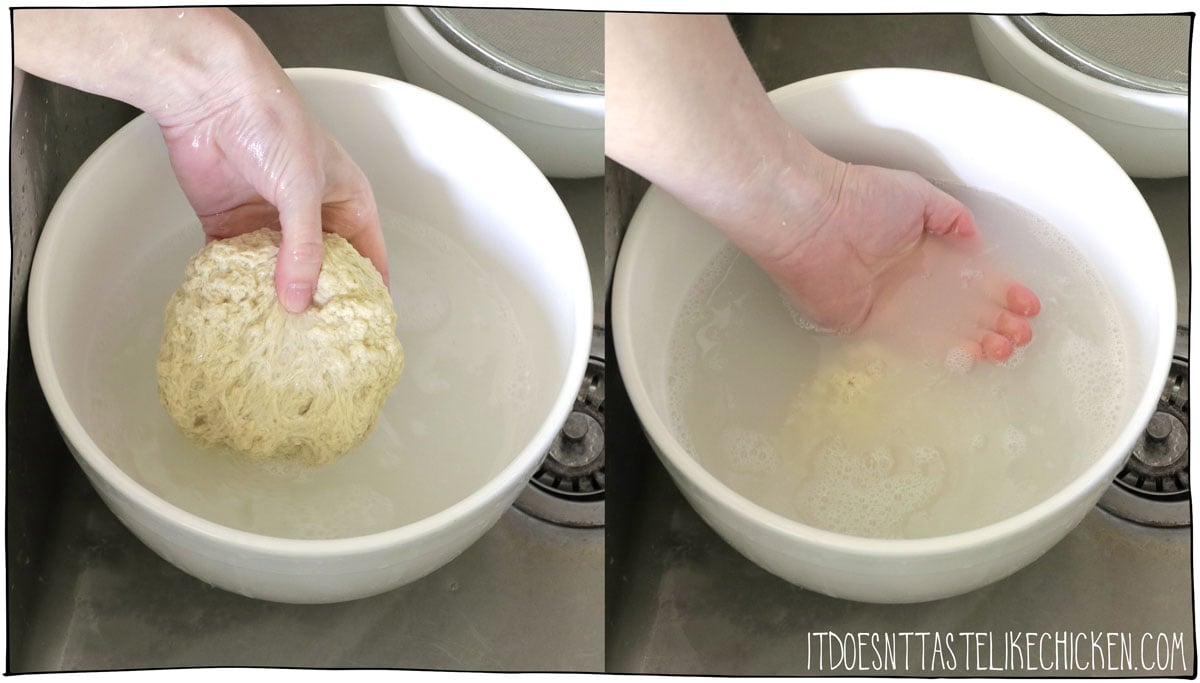
Washes 4 -5: keep repeating this process and the dough will start to come together again. The dough will be the texture of soft chewing gum and will be beige in colour. When you reach this stage, and the water becomes mostly clear you are done washing! Let the dough rest in a strainer for 10-20 minutes while you prepare your simmering broth.
Braid and Knot the Dough (5 minutes active work):
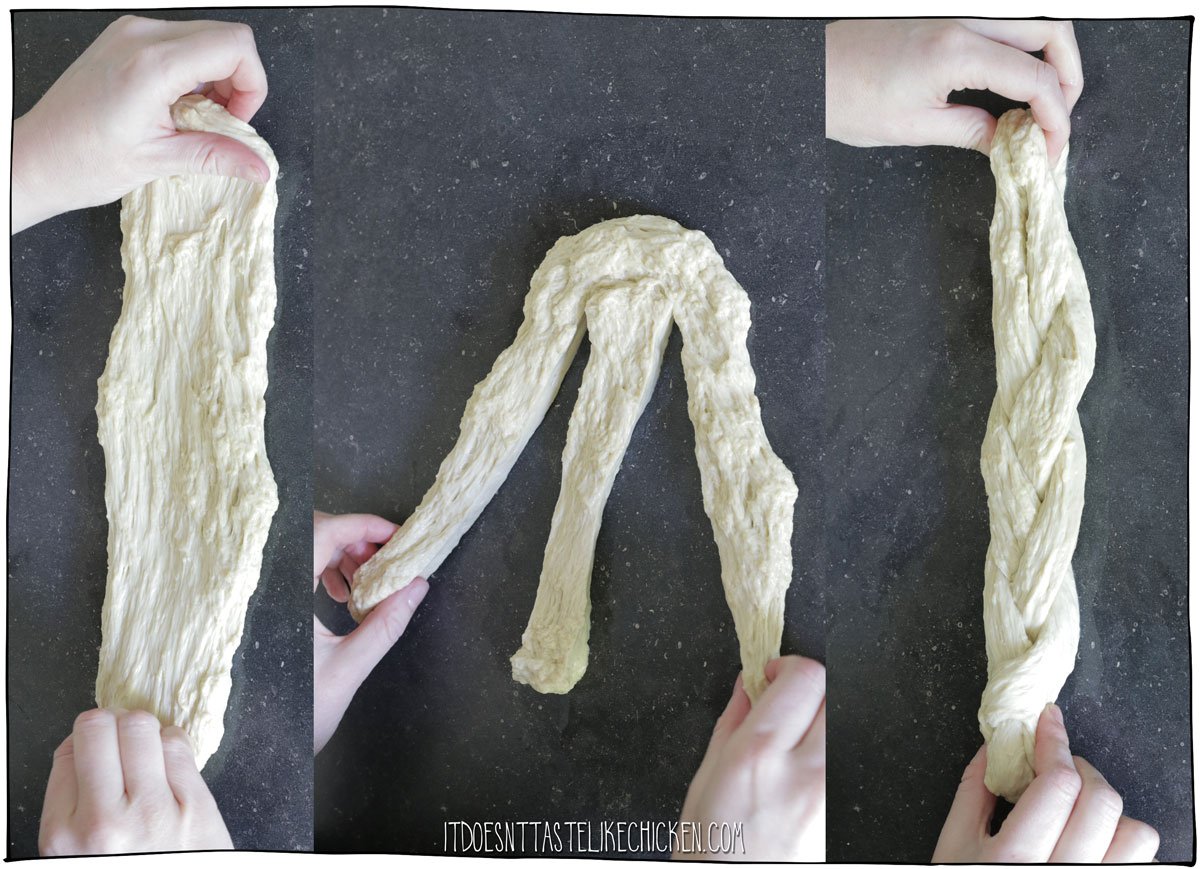
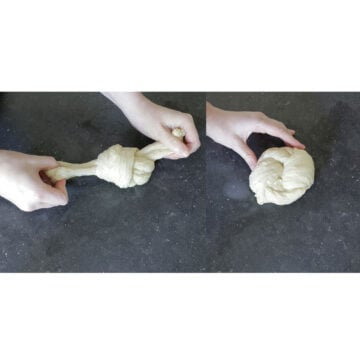
After the dough has rested for 10 - 20 minutes, gently stretch the dough into a long rectangle. Use a pair of scissors or a knife to cut the dough lengthwise into three strands leaving the top attached. Braid the dough, gently stretching it as you go. Tuck the loose ends into the braid.
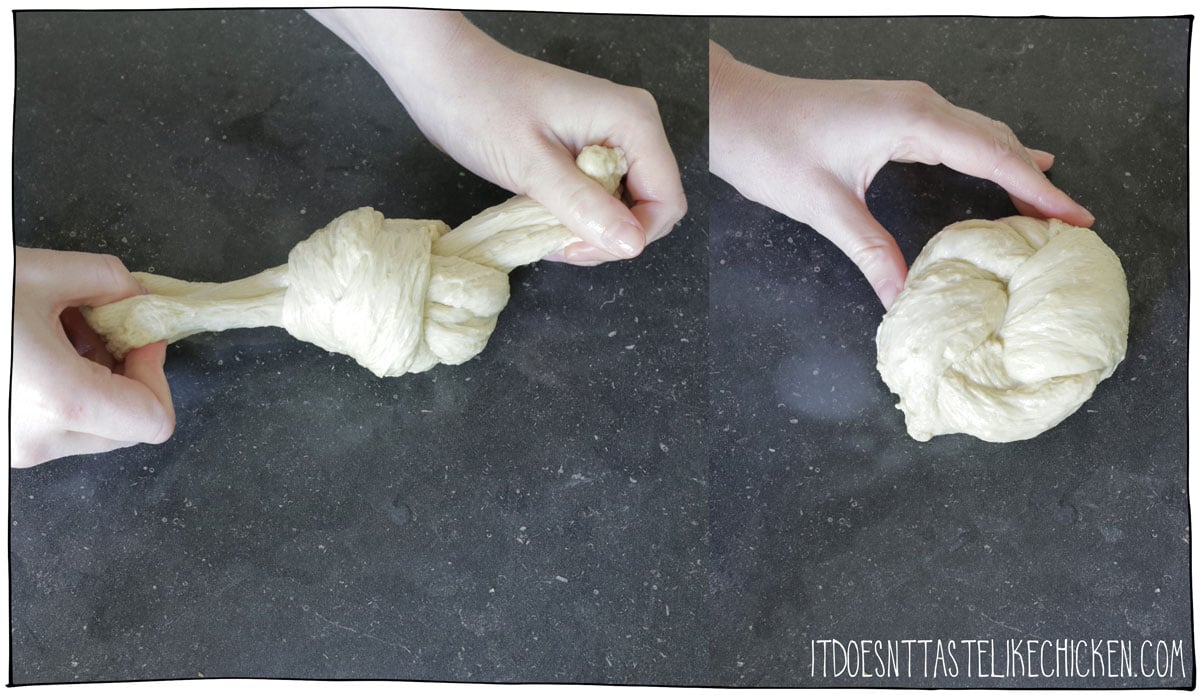
Gently stretch the braid and then tie it into 1 - 2 knots, tucking in any loose ends. Stretching, braiding, and knotting the dough will give the dough long stringy textures that mimic the muscle fiber texture of chicken.
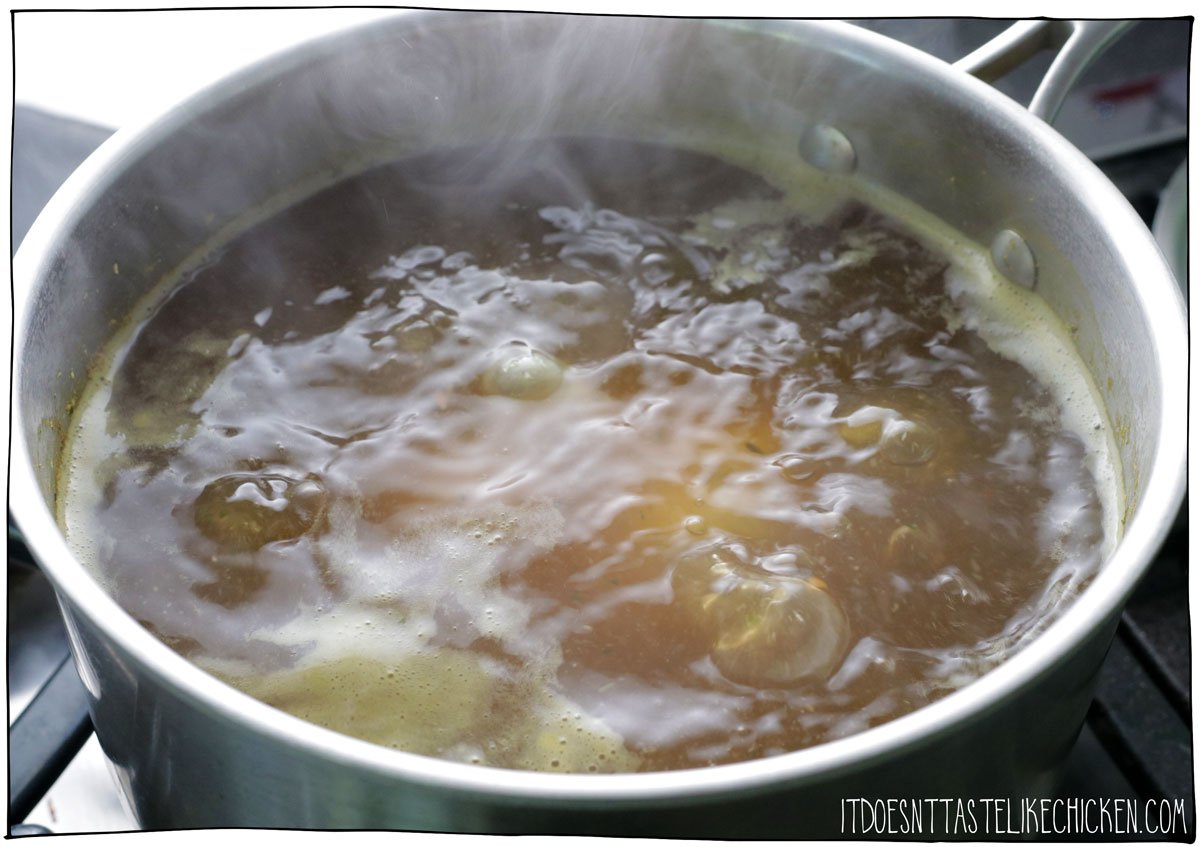
Simmer the Dough (1 hour hands-off):
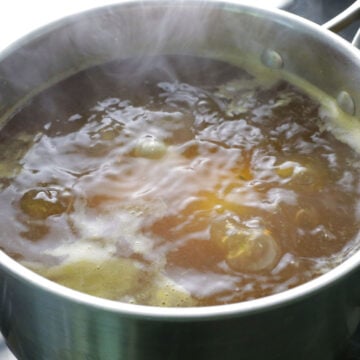
Add the vegetable broth, soy sauce, onion powder, and garlic powder to a medium pot and bring to a gentle simmer. Add the dough ball and gently simmer the dough for about 1 hour, flipping the dough halfway through.
Cool the Dough (1 hour - overnight hands-off):
Allow the dough to cool in the broth. I like to cool it overnight in the fridge but if you're in a pinch, you can add some ice to the broth to encourage it to cool faster.
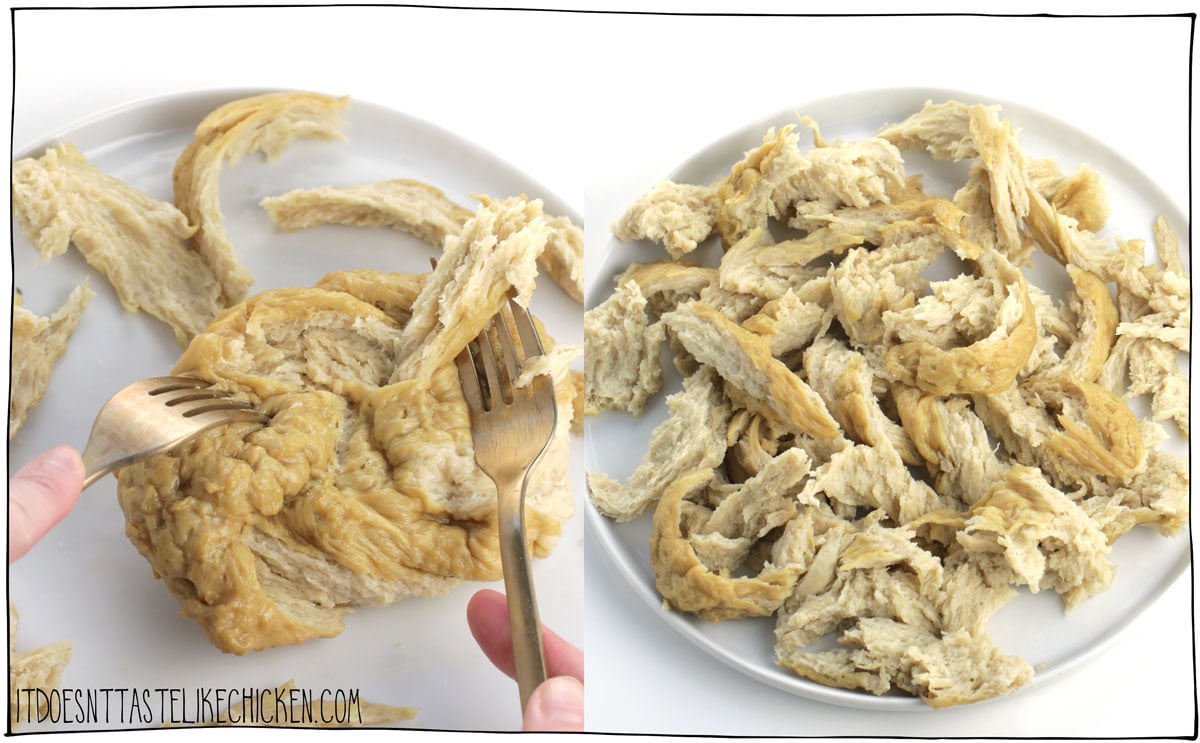
Shred the Vegan Chicken (5 minutes active work):
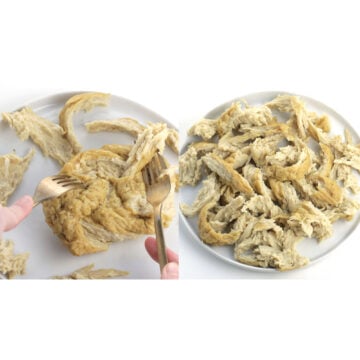
Use two forks, or your fingers to pull the 2 ingredient vegan chicken apart into shreds. Follow the grain of the dough to get the best shreds. Now you can enjoy the vegan chicken cold, or heat it up and add it to any dish you desire.
I like to fry my vegan chicken shreds in a bit of oil and season generously with salt and pepper. If making ahead of time, shred the chicken and store it in the leftover broth. It will keep well in the fridge for 5 - 7 days or it can be frozen.
Some Common Questions:
What is Seitan made of?
Seitan is made from gluten. Gluten is the protein which gives dough a stretchy, springy texture. When starch is removed from dough so that only the gluten is left that is seitan.
Can Seitan be made gluten-free?
Unfortunately no. Seitan is made directly from gluten.
Bon appetegan!
Sam Turnbull.
(click stars to vote)
2 Ingredient Vegan Chicken!
Servings: (makes about 2 cups shredded vegan chicken)
PRINT
PIN
COMMENT
Ingredients
For the vegan chicken:
- 4 cups all-purpose flour
- 1 ¾ cups water
For the vegetable broth simmer (feel free to season as you prefer):
- 6 cups vegetable broth
- 2 tablespoons soy sauce
- 2 teaspoons onion powder
- 1 teaspoon garlic powder
Instructions
Make the dough ball (10 minutes active work)
- Mix the flour and water together in a large bowl to make a shaggy dough. Using your hands begin kneading the dough in the bowl until it forms a ball. Dump the dough out onto a clean work surface and knead the ball of dough well for 5 - 8 minutes. If the dough is too sticky, sprinkle the dough with flour as needed. Alternatively, if you have a mixer with a dough hook you can use this to knead the dough.

Soak the dough (1 - 2 hours hands-off)
- Put the kneaded dough ball in a large clean bowl and cover it with cool water. Let rest in the water for 1 - 2 hours or overnight.
Wash the dough (15 - 20 minutes active work)
- Wash 1: drain the water off of the dough ball, then cover the dough with fresh room temperature water. Squeeze the dough under the water, squishing it between your fingers. The dough will be tough at first but will quickly soften and feel slimy. Continue squishing the dough for 3 - 5 minutes until the water is opaque thick milky white, this is the starch separating from the gluten. Drain off the starchy water. You can either discard the water or save it to use to make vegan bacon!Saving the starchy water: let the water sit overnight. The starch and water will separate. You will see the yellow water on top, and the white starch which will sink to the bottom. Pour off and discard the water leaving behind just the starch. Store the starch in an air-tight container in the fridge for up to a week or it can be frozen to use later.
- Washes 2 - 3: repeat the process of squeezing the dough underwater, squishing it and kneading it for several minutes before changing the water. The dough will start to fall apart into clumps, this is a good thing! Drain the starchy water, using a strainer to catch any bits of gluten dough. Note: I save the starchy water from the first 3 washes but do not save the rest of the water from the washes as there will not be much starch.
- Washes 4 -5: keep repeating this process and the dough will start to come together again. The dough will be the texture of soft chewing gum and will be beige in colour. When you reach this stage, and the water becomes mostly clear you are done washing! Let the dough rest in a strainer for 10-20 minutes while you prepare your simmering broth.
Braid and knot the dough (5 minutes active work)
- After the dough has rested for 10 - 20 minutes, gently stretch the dough into a long rectangle. Use a pair of scissors or a knife to cut the dough lengthwise into three strands leaving the top attached. Braid the dough, gently stretching it as you go. Tuck the loose ends into the braid. Gently stretch the braid and then tie it into 1 - 2 knots, tucking in any loose ends. Stretching, braiding, and knotting the dough will give the dough long stringy textures that mimic the muscle fiber texture of chicken.
Simmer the dough (1 hour hands-off)
- Add the vegetable broth, soy sauce, onion powder, and garlic powder to a medium pot and bring to a gentle simmer. Add the dough ball and gently simmer the dough for about 1 hour, flipping the dough halfway through.
Cool the dough (1 hour - overnight hands-off)
- Allow the dough to cool in the broth. I like to cool it overnight in the fridge but if you're in a pinch, you can add some ice to the broth to encourage it to cool faster.
Shred the vegan chicken (5 minutes active work)
- Use two forks, or your fingers to pull the vegan chicken apart into shreds. Follow the grain of the dough to get the best shreds. Now you can enjoy the vegan chicken cold, or heat it up and add it to any dish you desire. I like to fry my vegan chicken shreds in a bit of oil and season generously with salt and pepper. If making ahead of time, shred the chicken and store it in the leftover broth. It will keep well in the fridge for 5 - 7 days or it can be frozen.
Notes
Nutrition
⭐ Did You Make This Recipe?
I’d love if you left a rating and comment, it helps others find the recipe and makes my day! 💕


Rose says
I made this today. The taste is great but the texture is spongy. I am not sure what I did wrong.
Sam Turnbull @ It Doesn't Taste Like Chicken says
Hi Rose! I’m so happy you liked the flavor! If the seitan turned out spongy, my first thought is that the broth may have been simmering a little too vigorously. You want a very gentle simmer, not a boil, as too much heat can cause the seitan to puff up and become spongier. Also make sure to continue washing the dough until the water is mostly clear and the dough has that soft, stretchy, chewing-gum-like texture described in the recipe. I hope that helps for next time!
Jess says
I made this for the first time and it was a hit. I got a very decent yield (although I forgot to measure), and our family enjoyed the texture and flavor. I've already started another batch based on the success of the first one. Thanks so much!
Sam Turnbull @ It Doesn't Taste Like Chicken says
Yay!! I love that you already have batch #2 underway, Jess! 😍 I’m so happy you and your family loved the flavor and texture! 💚